About Trinity EyeCare




Our Eye Care Services

Comprehensive Eye Exams
From updating your eyeglasses prescription to detection and treatment of eye diseases, comprehensive eye exams are important for continued visual health.

Contact Lens Exams
During a contact lens exam, your eye doctor will check if you are a good candidate for contacts and find the best type of contacts for your needs..

Dry Eyes
Do you have dry, itchy, gritty-feeling eyes? Dry eye syndrome is a very common condition. We offer dry eye treatments at our eye care clinic.
Eye emergencies such as severe pain in the eye, or foreign objects puncturing the eye require immediate attention. Contact us immediately.
Clear vision is an essential part of a child’s healthy development and learning. Regular pediatric eye exams can help detect and treat common issues.
Children with myopia are at higher risk for potentially sight-threatening vision problems. Save your child’s vision with myopia management.
Eye diseases such as glaucoma and macular degeneration can cause severe loss of vision if not diagnosed and treated early. Our eye care team can help.
The ups and downs of diabetes can be difficult to navigate. How can diabetes affect your eyes? How can you and your eye doctor keep them healthy?
Presbyopia is a normal part of aging. If you’re past 40 and notice you can’t read up close, our eye doctors may be able to help.
Scleral lenses are a great option for those with severe dry eye or abnormally-shaped corneas. Is this comfortable alternative to traditional contacts right for you?
Vision therapy is a scientifically-proven regimen of in-office and at-home exercises to train the brain and eyes to work together better. Find out how we can help.
Orthokeratology is a non-invasive vision correction alternative to LASIK. Put in the specialty lenses while you sleep, and experience better vision in the morning.
Neuro Optometry trains healthy communication and coordination between the brain and eyes. This treats visual problems following concussions and other head injuries.
InfantSEE is a program that provides free comprehensive eye exams to infants 6-12 months old, regardless of a family’s financial status.
Eyeglasses & Frames

Designer Frames
Our extensive optical section offers a wide variety of eyeglass frames in every style, material & design. Come visit us today to see for yourself!
Our expert optical team can find just the right pair of glasses for you to be confident and look your best.
Lens coatings improve visual comfort, make it easier to clean your glasses and ensure your lenses last longer. Coatings include anti-scratch, anti-reflective, photochromatic and UV / blue light filters.
Contact Lenses

Contact Lens Fitting
We offer a wide range of contact lens options from dailies, monthly to multifocal contact lenses for crystal clear vision and superior comfort.
During a contact lens exam, your eye doctor will check if you are a good candidate for contacts and find the best type of contacts for your needs.
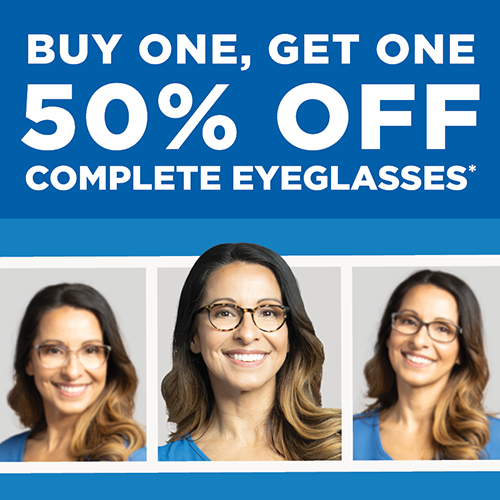
Buy One, Get One 50% Off Eyeglasses
*Requires purchase of complete prescription pairs, including frame and lenses. Discount applied to complete pair of equal or lesser value. Does not include sunglass frames,Barton Perreira, Cartier, Cazal, Chanel, Cutler and Gross, Dior, Dita Lancier, Fendi, Gucci, ic!Berlin, l.a. Eyeworks, Maui Jim, Mykita, Nifties, Oakley, Oliver Peoples, Persol, Ray-Ban, Robert Marc, Salt, Salvatore Ferragamo, Skaga, Silhouette, Tom Ford, WOOW, accessories, contact lenses, or medical procedures. Cannot be combined with any other discounts, promotions, or insurance plans. Not valid on previous orders. Other restrictions may apply. See practice for full details. Offer valid 04/08/2024-06/16/2024. 24AEG-729313